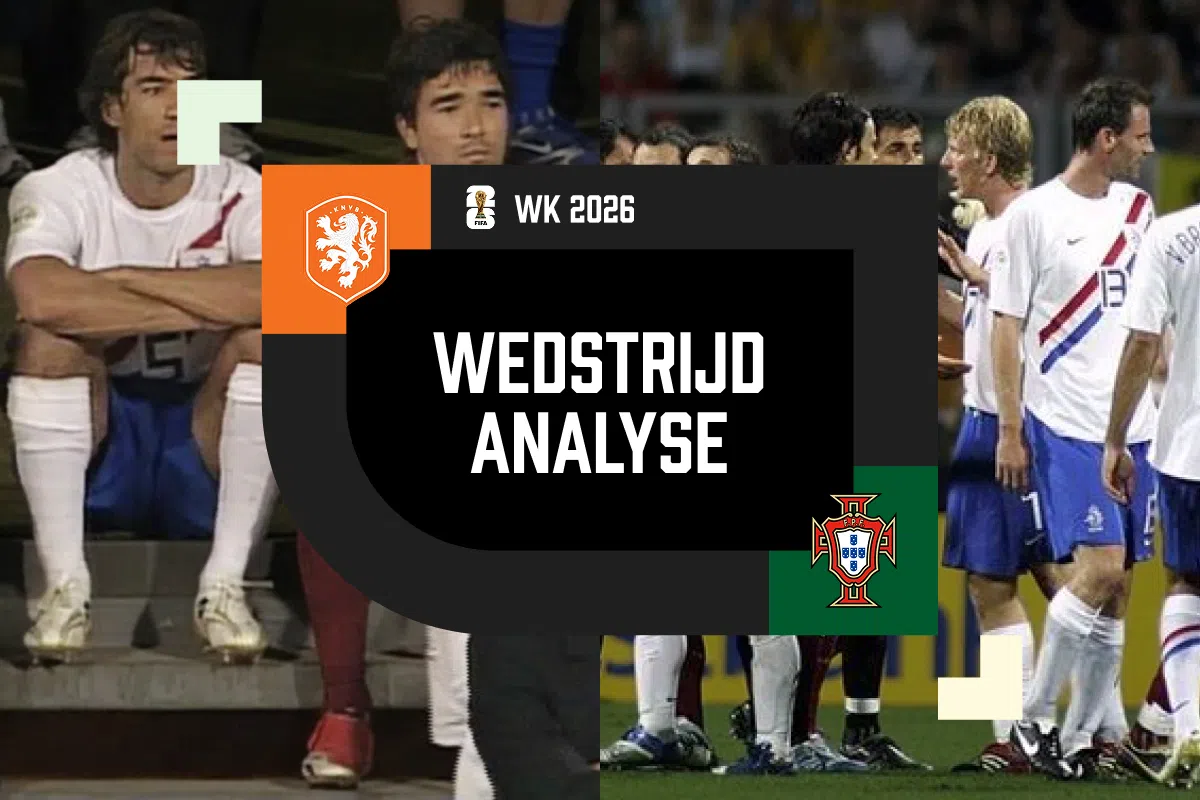
Analyse: de vergeten lagen van Portugal – Nederland (2006), de Slag van Neurenberg
Herbezinning op Portugal – Nederland (2006): 16 keer geel, 4 keer rood, de tackle van Boulahrouz op Ronaldo en het strafbankje met Deco en Van Bronckhorst. Met Blatters harde oordeel over Ivanov, Van Bastens zelfreflectie en zeven inzichten na het terugkijken van de volledige wedstrijd.
De aanslag van Khalid Boulahrouz op Cristiano Ronaldo, de 16 gele en 4 rode kaarten van scheidsrechter Valentin Ivanov en het gezamenlijke strafbankje met Deco en Giovanni van Bronckhorst: veel scènes uit de achtste finale tussen Portugal en Nederland maken deel uit van het nationale voetbalgeheugen. Minder bekend zijn enkele onderstromen van die avond. Twintig jaar later keren we terug naar Neurenberg voor een herlezing van een van de meest beladen WK-wedstrijden ooit.
Zelfs Sepp Blatter werd er wanhopig van. “Hij verdiende een gele kaart”, beet de FIFA-preses de Russische arbiter toe, die het duel volledig zag ontsporen. Ook Marco van Basten wees na afloop Ivanov als zondebok aan: “Het is jammer dat hij er zo’n puinhoop van heeft gemaakt.” Opvallend genoeg spaarde de bondscoach zichzelf. Van Basten gaf zichzelf na het toernooi een zeven als rapportcijfer, terwijl juist zijn tactische keuzes tegen Portugal ongelukkig uitpakten.
Voor deze analyse keken we de volledige achtste finale uit 2006 integraal terug. Dat leverde zeven inzichten op die het clichébeeld nuanceren:
- De toon werd vroeg gezet door harde duels, waarna de wedstrijd in een spiraal van irritatie belandde.
- De scheidsrechter groeide uit tot hoofdrolspeler; elke kaart woog zwaarder dan de vorige.
- Op de flanken botsten intensiteit en grensbewaking, met de overtreding op Ronaldo als kantelpunt in de beeldvorming.
- Oranje’s veldbezetting en keuzes vanaf de bank sloten niet aan bij het wedstrijdverloop.
- Psychologie speelde mee: spelers reageerden meer op prikkels dan op positiespel.
- Het speltempo stokte door vele onderbrekingen, waardoor ritme en structuur nauwelijks ontstonden.
- De erfenis van Neurenberg: een collectief geheugen van kaarten, maar ook lessen over regie, kalmte en koersvastheid.
Portugal – Nederland 2006 blijft een botsing die nieuwe generaties evenveel leert over wedstrijdmanagement als over duelkracht. De kaartenregen, de felle emoties en de uitspraken achteraf vertellen samen het verhaal van een avond waarop de controle weggleed: van het veld, van de arbitrage en – cruciaal – ook van de dug-out. Wie voorbij de iconische beelden kijkt, ziet vooral hoe details in keuzes en impulsen een topwedstrijd onherroepelijk kunnen kantelen.
Related Articles
Related articles
Teams
Tuchel roept Alexander-Arnold en Palmer terug bij Engeland
Thomas Tuchel heeft Trent Alexander-Arnold en Cole Palmer opnieuw opgeroepen voor Engeland, met de duidelijke boodschap dat selectie geen garantie is voor speeltijd. De bondscoach legt de nadruk op prestaties, zeker na hun afwezigheid op het WK. Ook andere opvallende keuzes en afwezigen worden besproken in de aanloop naar de Nations League-wedstrijden.
Teams
Almere City FC wint feestelijk van Heracles in Yanmar
In een feestelijke ambiance heeft Almere City FC met 1-0 gewonnen van koploper Heracles Almelo. Dit markeerde niet alleen de opening van hun nieuwe stadion, maar ook een belangrijke overwinning in de competitie.
Teams
Montella prijst Mancini en blikt vooruit: Turkije wil zich
Vincenzo Montella, bondscoach van Turkije, spreekt zich uit over Italië, de Nations League en de rol van Roberto Mancini. Hij ziet veel vernieuwing bij de Azzurri, zet in op jeugd en wil met Turkije de strijd aangaan met de Europese top.
Teams
Zorgen om Cornelius: lange afwezigheid dreigt na
Derek Cornelius, de Canadese verdediger, liep een blessure aan zijn heup op tijdens een training met de nationale ploeg. Bondscoach Jesse Marsch geeft meer duidelijkheid over de situatie.