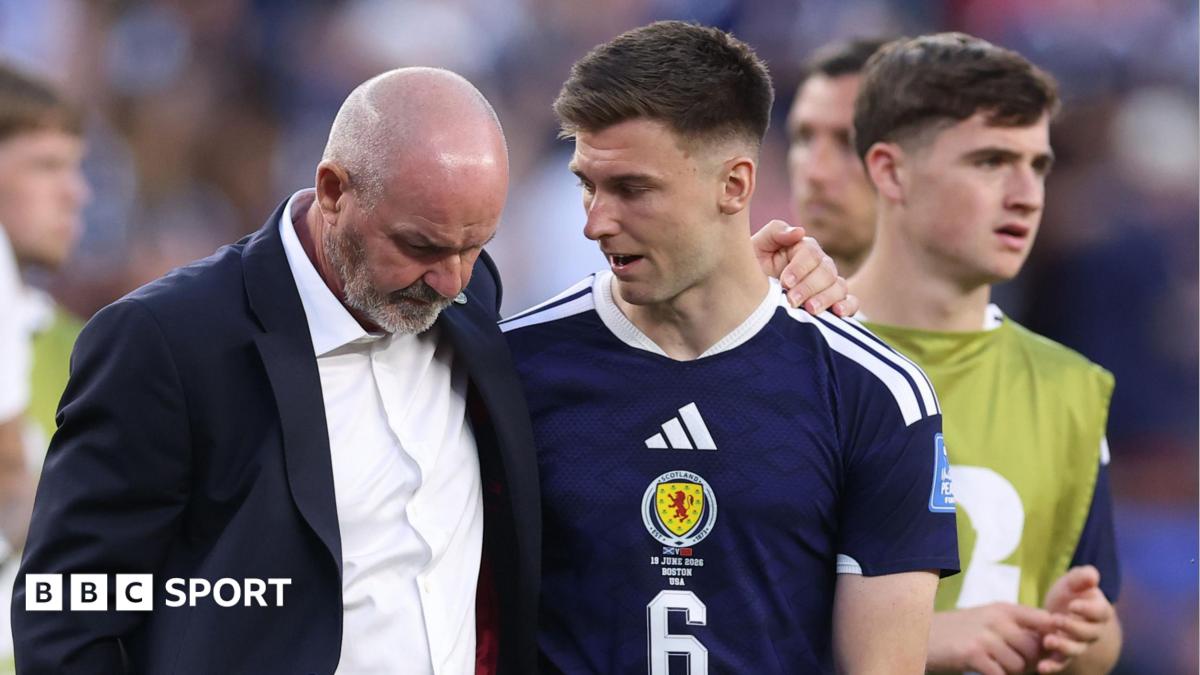
What have we learned from Scotland at the 2026 World Cup so far?
Scotland has achieved three points after two group matches at the 2026 World Cup after a win against Haiti and a defeat against Morocco. Although the attack is not yet convincing, the defense is solid. National coach Steve Clarke relies on his established names, but may have to tinker with his line-up given the pressure of the decisive match against Brazil.
After two group matches at the 2026 World Cup, Scotland is still in a reasonable position, but the tension remains high. With three points from the narrow 1-0 loss against Morocco and the small victory over Haiti, their fate in Group C hangs in the balance. Superpower Brazil awaits on Wednesday. A big defeat must be avoided; with a draw there is a good chance that the Scots will qualify for the knockout phase. But what are the main points of interest after these first two World Cup matches?
Lagging attack force Before the tournament, Scotland still looked offensively sharp in a 4-4-2 formation in practice matches with Curaçao and Bolivia (a total of eight goals). But against Haiti the shot count was low and the expected goals (xG) was even lower than that of the opponent. Fortunately, John McGinn's winning goal was scored via a swinging leg. Strikers Lawrence Shankland and Che Adams featured little in the game. In the second match against Morocco, Adams was again in a difficult match, was isolated and was substituted after more than seventy minutes. Scotland didn't get a single shot on target in this match. Clarke may be considering changes to the attack for the match against Brazil, where Dykes, Shankland, Stewart and Hirst, among others, are competing for a starting place.
Wingers as a dynamic weapon Youngsters like Ben Gannon-Doak (strongly came on against Haiti and with energy as a substitute against Morocco) and Findlay Curtis (19 years old, made his debut against Haiti) give hope for more of a threat from the flanks. It raises the question whether Clarke will use them as a weapon against Brazil's pressure.
Defensive reliability While things are difficult up front, the Scottish bloc is convincing defensively. Only one slip - in which Ismael Saibari took advantage of space behind Grant Hanley - was punished against Morocco. Defender Jack Hendry excelled with crucial interventions and a clever block. Certainty under the bar Angus Gunn (despite little playing time at Nottingham Forest) confirms Clarke's confidence. With an important 'clean sheet' against Haiti and strong reflexes against Moroccan attacks, he was a stable factor.
Gilmour's absence is palpable in midfield The absence of midfielder Billy Gilmour (injured prior to the tournament) is clearly noticeable. Without his calmness on the ball, Scotland has difficulty setting the pace and building up. Lewis Ferguson works hard, but the build-up is a struggle. Scott McTominay is not yet on track, while Tyler Fletcher, who came over from Manchester United, replaces Gilmour, but is a different type.
Outlook Scotland will have to do everything they can to keep their World Cup dream alive against Brazil. The defensive resilience is encouraging, but the attacking inability will need to be addressed quickly. The pressure is on national coach Clarke, who may intervene with fresh forces and dynamic substitutes.
Related Articles
- Mundial 2026
- [Jameis Winston Tận Hưởng Hành Trình World Cup 2026](https://banthangvn.com/vi/news/jameis- winston-tan-huong-hanh-trinh-world-cup-2026)
Related articles
Teams
Tuchel roept Alexander-Arnold en Palmer terug bij Engeland
Thomas Tuchel heeft Trent Alexander-Arnold en Cole Palmer opnieuw opgeroepen voor Engeland, met de duidelijke boodschap dat selectie geen garantie is voor speeltijd. De bondscoach legt de nadruk op prestaties, zeker na hun afwezigheid op het WK. Ook andere opvallende keuzes en afwezigen worden besproken in de aanloop naar de Nations League-wedstrijden.
Teams
Almere City FC wint feestelijk van Heracles in Yanmar
In een feestelijke ambiance heeft Almere City FC met 1-0 gewonnen van koploper Heracles Almelo. Dit markeerde niet alleen de opening van hun nieuwe stadion, maar ook een belangrijke overwinning in de competitie.
Teams
Montella prijst Mancini en blikt vooruit: Turkije wil zich
Vincenzo Montella, bondscoach van Turkije, spreekt zich uit over Italië, de Nations League en de rol van Roberto Mancini. Hij ziet veel vernieuwing bij de Azzurri, zet in op jeugd en wil met Turkije de strijd aangaan met de Europese top.
Teams
Zorgen om Cornelius: lange afwezigheid dreigt na
Derek Cornelius, de Canadese verdediger, liep een blessure aan zijn heup op tijdens een training met de nationale ploeg. Bondscoach Jesse Marsch geeft meer duidelijkheid over de situatie.