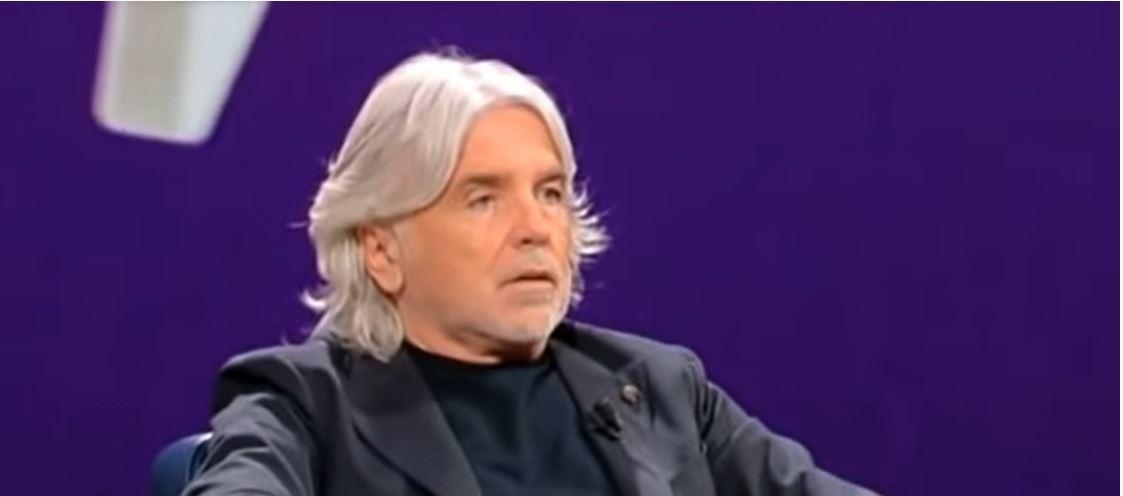
Zazzaroni: 'Mancini is in, now the Italians' – five proposals
Ivan Zazzaroni makes five concrete proposals in a column to reform Italian football. He sees the arrival of Roberto Mancini as a starting signal to tackle youth training, cost structure and trainer training.
Zazzaroni: 'Mancini is in, now the Italians' – five proposals to
According to Tuttomercatoweb.
Background
Roberto Mancini, recently appointed as Italy coach, plays a key role in these proposed reforms. His experience and vision could be crucial for improving youth development and tackling the structural problems currently undermining Italian football.
Why this matters
The appointment of Roberto Mancini as national coach is seen as a crucial step in the reform of Italian football. Ivan Zazzaroni emphasizes that the current structure of the youth academy and the costs for amateur clubs hinder the development of talents. It is essential that these issues are addressed to improve the performance of the National Team and ensure a sustainable future for Italian football.
Key points
- Zazzaroni: 'Mancini is in, now the Italians' – five proposals.
- Ivan Zazzaroni makes five concrete proposals in a column to reform Italian football.
- Zazzaroni: "Fatto Mancini, facciamo gli italiani". Le 5 proposte per rilanciare la Nazionale.
Italian sports journalist Ivan Zazzaroni believes that the appointment of Roberto Mancini as national coach should only be the beginning of a broader reform of Italian football. In his editorial for Corriere dello Sport, he points out structural bottlenecks that, according to him, have slowed down the level of the Nazionale and the flow of talent. His message: now that Mancini has arrived, Italian football must finally tackle itself.
Zazzaroni mainly identifies the cost structure and youth training as pain points. Families and amateur clubs bear high costs, while the route from talent to professional football is unnecessarily difficult and selective. That is why he comes up with five proposals that should strengthen the foundation and make the national team better in the long term.
These are Zazzaroni's five key points:
- Professional clubs pay the federal costs: the costs for federal allowances, mandatory professional functions and inspection and homologation requirements for accommodations should no longer fall on families and amateur associations, but should be borne by professional clubs.
- Redesign the youth academy: start the professional courses from 12 years old instead of 6, with selections limited to 22 players so that everyone gets enough playing time. Competition experience is sacred; up to and including Under 15, all players called up would be required to take action.
- Invest in trainers: make the trainer courses free and accessible through the national association (FIGC). The current points system for qualifications must be overhauled to promote quality and advancement.
- Reduce the tax burden and improve reimbursements: abolish VAT and waste tax for amateur clubs and increase training allowances when youth players move to professional clubs. In this way, clubs are rewarded for development work.
- Adjust thecalendar and regulations: organize the season in semesters to dampen the so-called Relative Age Effect. Also revise the rules surrounding foreign minors and enforce smarter selection and rotation models at major academies. Football schools should reward creativity, individuality and passion rather than early uniformity.
According to Zazzaroni, the core lies in creating more playing time, better guidance and fewer barriers for young football players. By removing the financial pressure from the grassroots and encouraging coach development, the pool of talent should become wider and deeper. This is essential to sustainably raise the level of the Nazionale.
His plea fits into a broader European debate about youth development and selection policy at a young age. For Italy, it means in concrete terms: less bureaucracy, more football moments and a training culture that values deviation and creativity. With Mancini as figurehead, Zazzaroni argues, the momentum is there for reform from the top down and the bottom up. Whether the Italian football authorities take up the challenge will determine whether the Nazionale can structurally join the top in the coming years.
What's happening now
Zazzaroni makes five concrete proposals that should strengthen the basis of Italian football. This includes restructuring the youth academy and reducing the financial pressure on families and amateur clubs. The FIGC will now need to consider how these reforms can be implemented, with the aim of improving the flow of talent into the National Team.
Frequently Asked Questions
What happened with the appointment of Roberto Mancini?
Roberto Mancini has been appointed coach of the Italian national team.
Who confirmed the need for reforms in Italian football?
Italian sports journalist Ivan Zazzaroni confirmed the need for reforms in his editorial for Corriere dello Sport.
Why is it important to tackle Italian football now?
Zazzaroni argues that Mancini's appointment should only be the start of a broader reform to address structural bottlenecks that hinder the level of the Nazionale and the flow of talents.
What changes does Zazzaroni propose?
Zazzaroni makes five proposals, including reducing costs for amateur clubs, redesigning the youth academy, investing in trainers and improving fiscal pressure.
What are the pain points in the current system according to Zazzaroni?
According to Zazzaroni, the cost structure and youth training are the main pain points that inhibit the development of talent.
Related articles
- >
Related articles
Related articles
- >
Related articles
- >
Related articles
Related articles
Teams
Super League: Wakefield-prop Emre Guler mist resterende
Wakefield-triof Emre Guler krijgt twee duels schorsing voor slaan en mist daardoor de halve finale tegen Wigan en een eventuele Grand Final. Andere disciplinaire beslissingen: boetes voor Mike McMeeken en James Harrison; geen verdere actie tegen Luke Yates; Peta Hiku twee wedstrijden geschorst.
Teams
Atlético Madrid richt zich na transferperiode op cruciale
Atlético Madrid gaat na een hectische transferperiode, waarin de toekomst van Julián Álvarez centraal stond, op bezoek bij Athletic Club. Nu de Argentijn tot de winterstop in Madrid blijft, kan de ploeg zich volledig richten op de competitie. Het treffen in het San Mamés is een belangrijk moment voor de 'colchoneros' om aansluiting te houden bij de top van La Liga.
Teams
Sandro Wagner in opspraak na rel met oud-speler bij FC
Voormalig FC Augsburg-speler Mads Pedersen heeft in een interview openheid gegeven over zijn conflict met voormalig trainer Sandro Wagner. Volgens Pedersen zou Wagner hem en een teamgenoot als 'ratten' hebben bestempeld, wat uiteindelijk tot hun verwijdering uit de selectie leidde. Sandro Wagner begon onlangs aan een nieuw trainersavontuur bij Hannover 96.
Teams
PSG komt moeilijk tot winst, Luis Enrique grapt
PSG ligt onder het vergrootglas na puntenverlies. Luis Enrique pareert de kritiek met humor en vertrouwen in het spel van zijn team, en wijst op de dominantie die volgens hem normaal gesproken tot winst leidt.