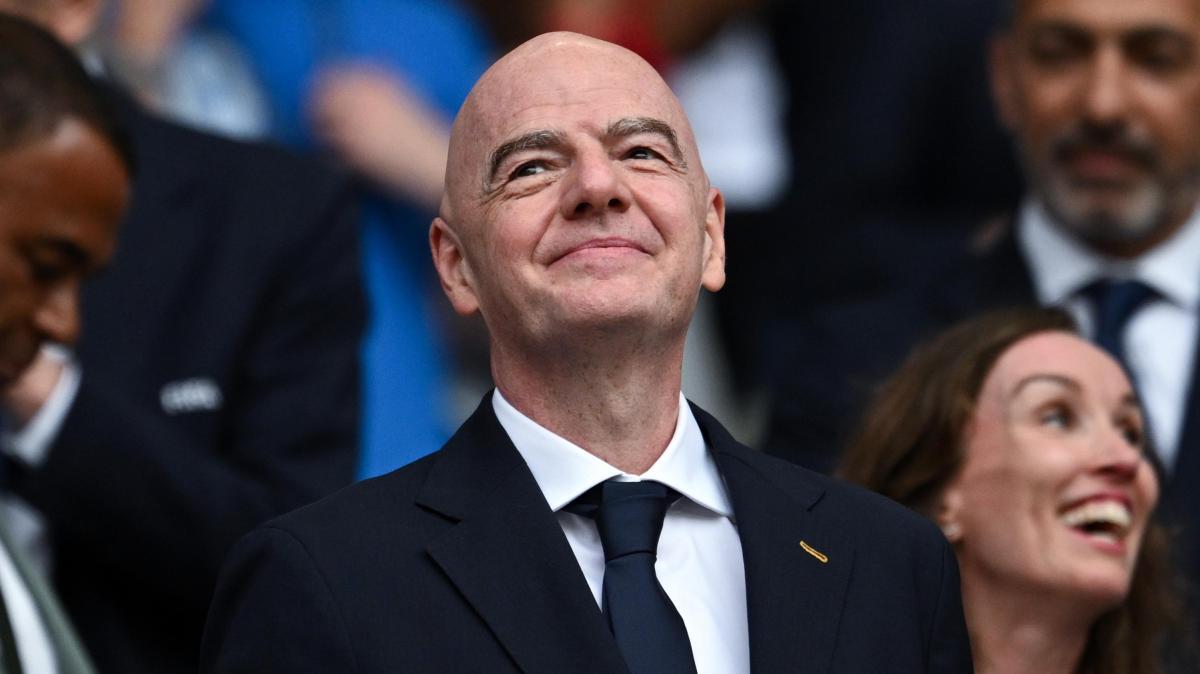
Balogun and Trump, Iran and the 'sell-out' of the World Cup: this is what threatens
Analysis: Growing criticism of FIFA boss Gianni Infantino - with themes ranging from Balogun to Trump and Iran - affects the image surrounding the association and the 2026 World Cup, which is bigger and more commercial than ever.
Balogun and Trump, Iran and the 'sell-out' of the World Cup: this is what threatens
According to Tuttomercatoweb.
Background
Folarin Balogun, as an emerging talent, could play an important role for the US National Team in the 2026 World Cup. His development and performance will be closely monitored, especially in light of the commercial and political pressure currently being faced by FIFA. The focus on players like Balogun emphasizes the need for a balance between sporting integrity and commercial interests.
Why this matters
The growing criticism of Gianni Infantino and FIFA has direct consequences for the image surrounding the 2026 World Cup. With the expansion to 48 countries and the involvement of the United States, Canada and Mexico, the tournament is becoming more commercial and complex. This raises questions about the impact on players like Folarin Balogun and the preparation of teams like the Dutch team.
Key points
- Balogun and Trump, Iran and the 'sell-out' of the World Cup: this is what threatens.
- Analysis: Growing criticism of FIFA boss Gianni Infantino - with themes ranging from Balogun to Trump and Iran - affects the image surrounding the association and the 2026 World Cup, which is bigger and more commercial than ever.
- Balogun e Trump, l'Iran, la svendita del Mondiale: così Infantino are perdendo la FIFA.
The criticism of FIFA's course extends beyond just 2026. The strong commercialization of the international calendar - such as a further expanded club tournament and increasingly dense schedules - raises questions about player welfare and sporting balance. Players' associations and top trainers have often expressed their concerns about overload, while associations and organizers point out theglobal growth of the game and the economic spin-off that major events generate.
At the same time, political sensitivity plays a role. The governing center of world football operates in an environment where meetings with world leaders, as well as discussions about countries and geopolitics, simply benefit from every decision. In that context, names like Donald Trump and countries like Iran inevitably fall, and they reinforce the debate about how independent and values-driven football management still is or should be.
What does this mean for the Dutch fan? First of all, the 2026 World Cup will be different - sportingly and organizationally - from all previous editions. More countries and a more complex route to the knockout phase make the tournament more unpredictable. For the KNVB and the Oranje technical staff, the challenge lies in meticulous planning: from travel days and recovery times to match management across multiple time zones. For FIFA and Infantino, the challenge lies elsewhere: maintaining support. Because if the perception persists that commerce takes precedence over the sporting heart of the game, then every decision - from schedule to allocation - will be put under a magnifying glass.
One thing is certain: towards 2026 it will not only be about who will become world champion, but also about confidence in who will shape the tournament. And precisely at that point, according to analyses, Infantino's 'honeymoon week' is over.
What's happening now
The run-up to the 2026 World Cup will be crucial for FIFA and Infantino, especially with increasing pressure from various quarters. Teams will have to adapt to the new format and the logistical challenges that the larger setup brings. For players like Balogun, this may mean preparing for more intense competition and a tighter schedule.
Frequently Asked Questions
What is the current situation surrounding Gianni Infantino?
Pressure is increasing on FIFA president Gianni Infantino, with growing criticism of his governance style, which is seen as too political and commercial.
Who are the important names mentioned in the criticism?
Folarin Balogun, Donald Trump and Iran are mentioned as symbols of the current problems within FIFA.
Why is there so much criticism of FIFA now?
Criticism has increased in the run-up to the 2026 World Cup, which will entail drastic changes, such as an increase in the number of participating countries.
What are the most important changes for the 2026 World Cup?
The 2026 World Cup will be the first edition with 48 countries, a longer group stage and an earlier starting knockout stage, leading to a longer duration of the tournament.
How do the changes affect the playing field for players and supporters?
The changes require a tighter preparation schedule for teams and more planning, time and budget for supporters due to longer distances between host cities.
Related articles
- De la Fuente: "Never had any doubts, no problem in 52 days.
- Increasing pressure on FIFA and Infantino due to departure of advisor and
Related articles
Related articles
Related articles
Gerelateerde artikelen
WC 2026
UEFA houdt bedreiging van een WK-boycot in stand ondanks FIFA-druk om
UEFA houdt vast aan de mogelijkheid om het WK te boycotten, terwijl FIFA probeert de interne strubbelingen op te lossen. De situatie kan verstrekkende gevolgen hebben voor het komende WK in 2026.
WC 2026
FIFA en het WK: controversiële beslissingen door de jaren heen
Het WK voetbal staat wereldwijd bekend om legendarische doelpunten, verrassende winnaars en intense rivaliteit. Maar soms komen de headlines niet alleen van het veld, maar ook uit de bestuurskamers van de wereldvoetbalbond. FIFA heeft in zijn lange bestaan enkele spraakmakende besluiten genomen die regelmatig tot ophef hebben geleid, denk aan het wel of niet toelaten van spelers, de invloed van politieke leiders en opvallende straffen. De gevallen rond Balogun, Garrincha en de rol van Pinochet tonen hoe complex en omstreden het bestuur achter het toernooi soms kan zijn.
WC 2026
Wereldkampioenschap finale: Argentinië neemt het op tegen Spanje in
De wereld kijkt uit naar de eindstrijd tussen Argentinië en Spanje op het WK. Ontdek hier het aanvangstijdstip, de sterspelers, analyse van beide teams en wat er op het spel staat tijdens deze veelbesproken finale.
WC 2026
De la Fuente: "Nooit getwijfeld, in 52 dagen geen enkel probleem.
Luis de la Fuente vertelt in AS over Spanje op het WK 2026: totale vertrouwen in zijn selectie, 52 dagen samen zonder problemen en een herkenbare speelwijze waartegenstanders zich op instellen.